
Beyond the Nobel Prize and Man Booker Accolades
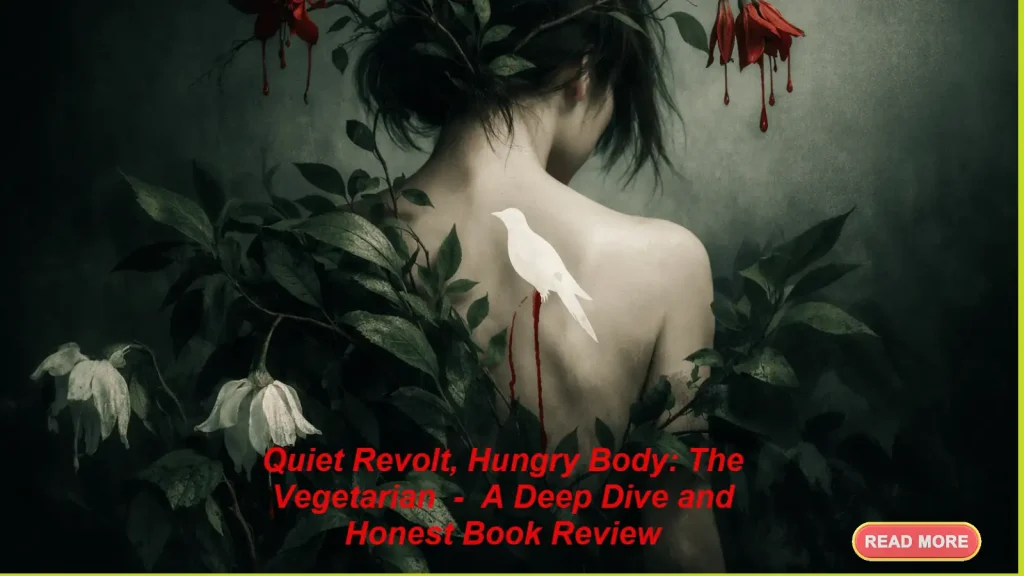
Han Kang’s The Vegetarian is a novel that occupies a unique space in contemporary literature.
Since winning the Man Booker International Prize in 2016, it has been dissected, lauded, and frequently misunderstood.
Often categorized merely as a “disturbing” or “visceral” read, such labels fail to account for the surgical precision with which Han Kang dismantles the constructs of modern Korean society.
This book is not just a study of a woman who stops eating meat; it is a profound ontological protest against the violence embedded in domesticity, patriarchy, and the expectations of the human form.
By examining the narrative architecture and the socio-political undercurrents of the work, we can move beyond the surface-level shock factor and appreciate the novel as a masterclass in psychological disintegration.
From South Korea to Global Phenomenon

The trajectory of The Vegetarian from a mid-list literary title in South Korea to a global phenomenon is a testament to the universal resonance of its themes.
While set firmly within the cultural context of Seoul, the novel speaks to the global struggle for bodily autonomy.
Han Kang, through her restrained, clinical prose, explores how individuals are forced to conform to the expectations of family and state.
The translation by Deborah Smith played a pivotal role in this international reception, introducing an English-language audience to a narrative voice that feels both alien and intimately familiar.
The novel’s success lies in its ability to navigate the tension between the domestic sphere and the wider societal structures that demand compliance.
The Central Question: Mental Illness or Radical Autonomy?
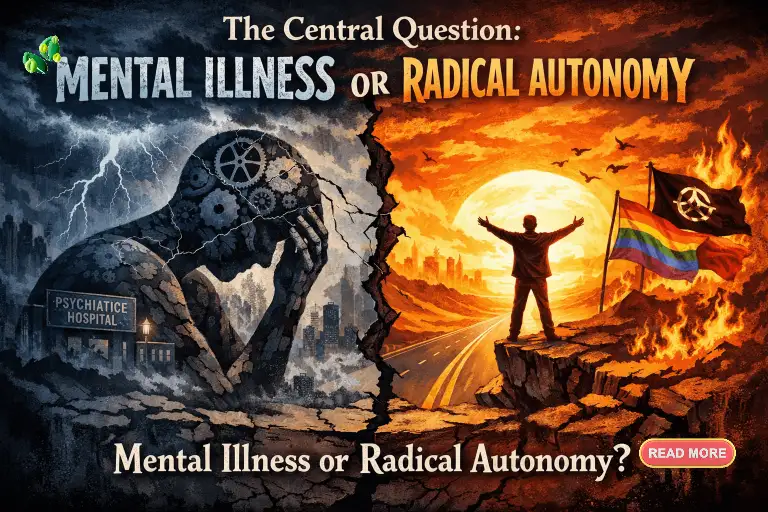
The common trap for readers is to pathologize the protagonist, Yeong-hye.
Is she suffering from schizophrenia, anorexia, or a deep-seated depressive episode? This interpretation, however, serves the narrative goals of the characters who try to “fix” her, not the intent of the author.
If we view Yeong-hye’s rejection of meat not as a symptom of illness but as an act of radical autonomy, the power dynamic shifts.
Her refusal to consume the products of violence is a refusal to participate in the patriarchal systems that govern her life.
In a world defined by the “human” condition, her descent is an attempt to transcend it, questioning whether insanity is perhaps a rational response to an inherently violent society.
A Triptych of Perspectives
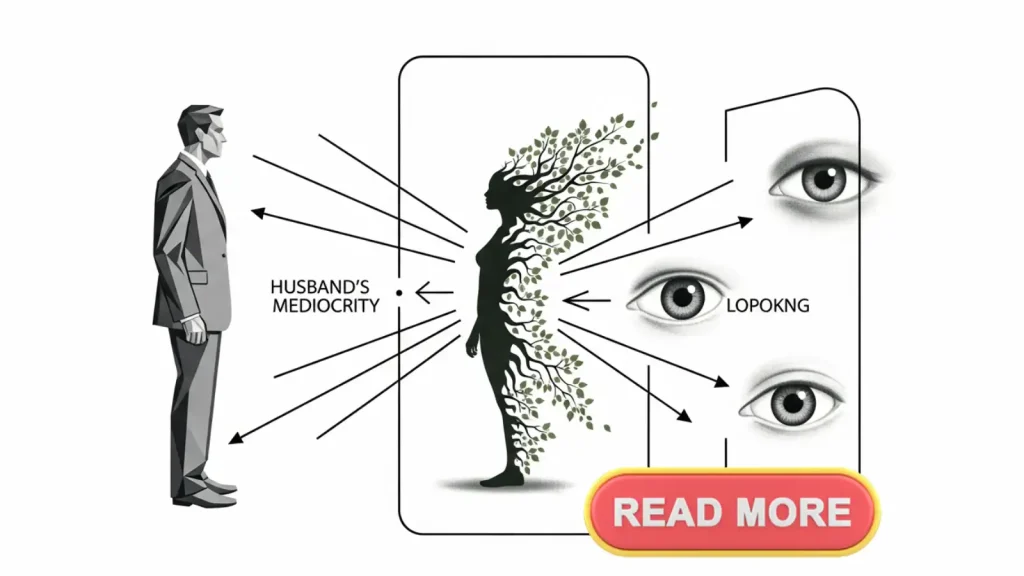
The novel’s triptych structure: Yeong-hye is never given her own voice, but is instead constructed through the oppressive, external perspectives of others.
Part One: “The Vegetarian” – The Husband’s Mediocrity
The first section introduces us to Yeong-hye through the eyes of her husband, a man defined by his absolute mediocrity and his adherence to the status quo.
To him, his wife is an appliance—a functional entity that should be quiet, obedient, and useful.
When she stops eating meat, it is not her suffering that concerns him, but the social inconvenience.
His narration serves as a critique of the mundane, patriarchal gaze that reduces women to their roles within the family unit.
Part Two: “Mongolian Mark” – The Brother-in-Law’s Obsession

The second section shifts to the brother-in-law, an artist whose creative stagnation leads him to project his desires onto Yeong-hye.
This section explores the objectification of the body, where her “Mongolian mark” becomes a canvas for his sexual and artistic fixation.
Here, Han Kang illustrates how even “liberation” in the form of art can be a form of predatory behavior, further trapping the protagonist in a web of external projections.
Part Three: “Flaming Trees” – In-hye’s Survival and Empathy
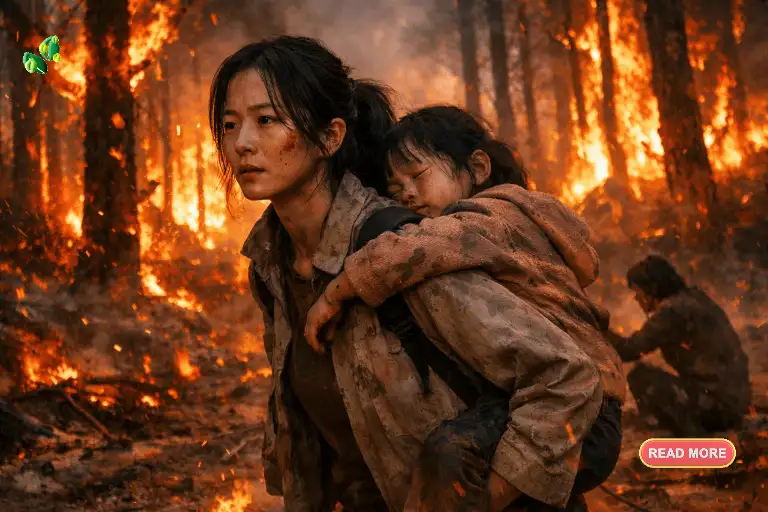
The final section is voiced by In-hye, Yeong-hye’s sister.
Unlike the previous narrators, In-hye offers a perspective tempered by shared history and trauma.
Her struggle is one of survival within the same suffocating family environment that broke her sister.
This section provides a necessary anchor, grounding the ethereal, plant-like trajectory of Yeong-hye in the reality of living, breathing human existence.
The Role of Silence: Narrative Control and the Erasure of Yeong-hye
Why the Protagonist Never Speaks for Herself
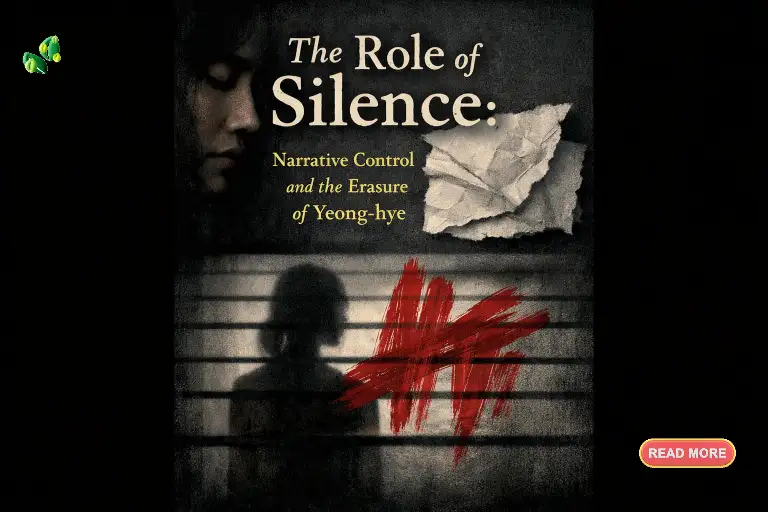
The most striking stylistic choice in The Vegetarian is the deliberate absence of Yeong-hye’s internal monologue.
We never hear her reasons, her justifications, or her pleas.
This narrative erasure is the point.
By denying her a voice, Han Kang forces the reader to acknowledge how the world silences those it deems deviant.
Yeong-hye is a void that others fill with their own anxieties.
Psychological Torment vs. Tactful Resistance

Is Yeong-hye’s silence a form of torment or a refined tool of resistance? By refusing to engage in the linguistic games of her family, she escapes their control.
Her silence is the final frontier of her autonomy.
It is the only space they cannot colonize, proving that in a society where speech is expected, silence is the most radical form of dissent.
Breaking Social Norms
The “Pork Belly” Catalyst: Meat-Eating as Patriarchal Participation
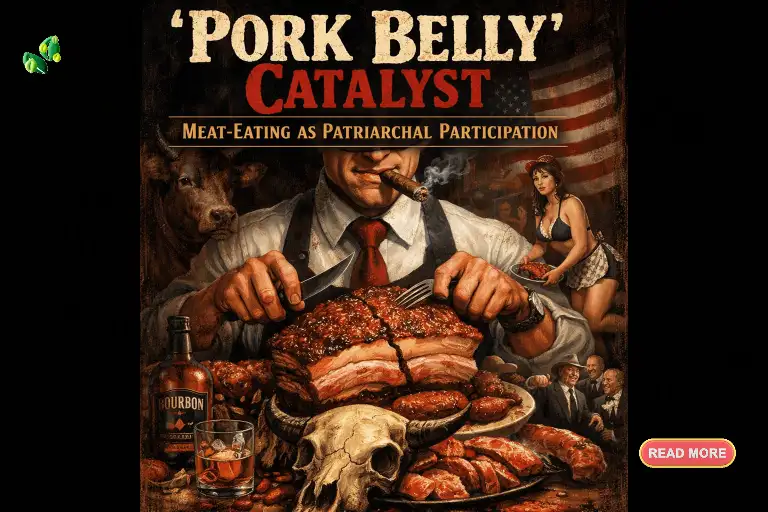
In Korean society, the shared meal—especially meat—is a ritual of cohesion and communal identity.
When Yeong-hye’s father attempts to force meat into her mouth, it is an act of physical violence intended to restore the social order.
It symbolizes the patriarchal insistence that women must consume the products of the masculine, violent world they are born into.
Animal Welfare, Childhood Trauma, and the Memory of Animal Torture

The protagonist’s vegetarianism is rooted in a childhood trauma involving a dog beaten to death by her father.
This memory is not just a backstory; it is the seed of her rejection of humanity.
Her refusal to eat meat is an act of empathy for the suffering that sustains human life, exposing the hypocrisy of a civilization that masks its inherent cruelty through the consumption of the “other.”
Food Disintegration and the Rejection of the Human World
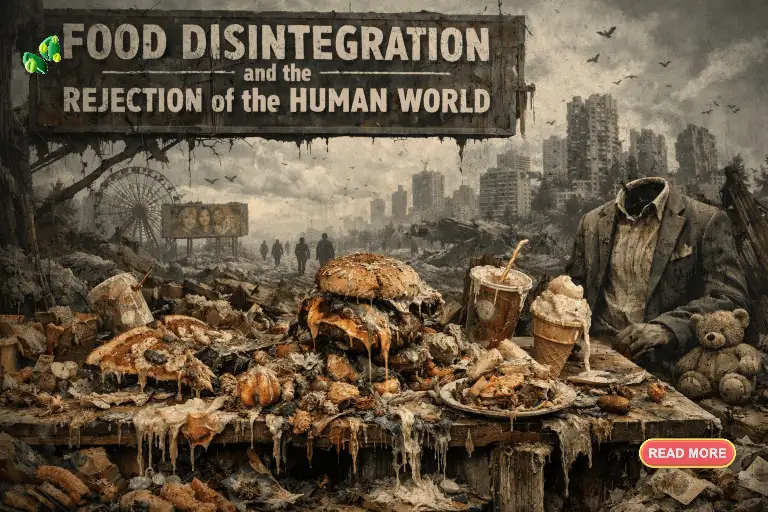
As the novel progresses, Yeong-hye’s rejection of meat expands to a rejection of all food, and eventually, the very act of digestion.
This disintegration is her transition away from the human world.
She seeks a form of existence that does not rely on the destruction of life, moving closer to the natural world of plants and sunlight.
A Critique of South Korean Society and Patriarchal Control
Misogyny and Gender Roles in Contemporary Seoul
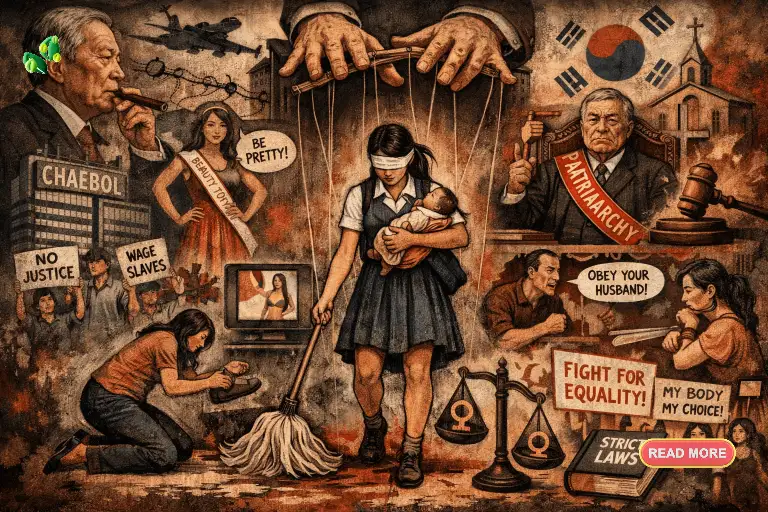
The setting of Seoul is vital to understanding the pressure cooker environment Yeong-hye inhabits.
It is a city defined by ambition, progress, and strict gender hierarchies.
The misogyny she faces is not necessarily the villainous variety, but the systemic kind—the kind that expects women to be supportive wives, productive daughters, and silent ornaments.
The Family Environment as a Site of Violence
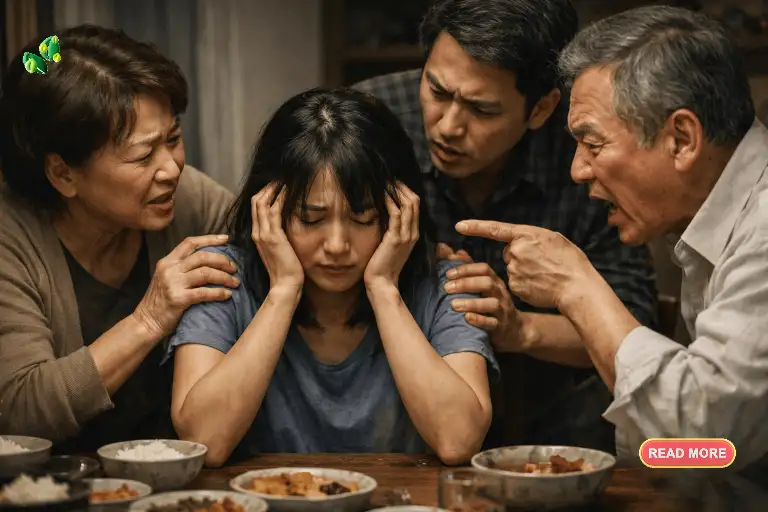
The family is not a sanctuary here; it is the site of the original injury.
The expectations placed upon Yeong-hye by her parents and her husband illustrate that domestic violence is not limited to physical blows.
It is found in the pressure to conform, the expectation of utility, and the refusal to respect the boundaries of the individual soul.
Bodily Autonomy: The Struggle to Own One’s Self
The central question of the novel is who has the right to control a body.
Does it belong to the state, the family, or the individual? Yeong-hye’s journey is a violent assertion of ownership.
Even as her body fails her, she is taking the only action available to her—reclaiming the vessel of her own consciousness.
The Kafkaesque Metamorphosis: From Human to Plant

The Natural World as a Sanctuary from Human Violence
The transformation into a plant is the ultimate escape.
Plants do not kill; they do not speak; they simply exist.
The natural world acts as a final refuge for Yeong-hye, a place where she can exist without being subjected to the predatory nature of human interactions.
Sexual Ecstasy and the Art Project: Transgressing Boundaries
The scenes involving the art project are intentionally jarring.
They challenge the reader’s perception of sexuality and consent.
By blurring the lines between art, body, and nature, Han Kang forces us to confront the uncomfortable reality that society often views women as objects to be manipulated for the fulfillment of others.
The Hospital Setting: Clinical Control vs. Spiritual Metamorphosis
The final scenes in the psychiatric ward are a clash of ideologies.
The hospital, with its clinical white walls and forced feeding tubes, represents the attempt of society to “cure” the individual back into submission.
However, Han Kang suggests that what they call an illness is actually a metamorphosis that is beyond their control.
The Craft of the Prose: Analyzing Han Kang’s Stylistic Choices
The Power of Short and Concise Sentences
Han Kang’s prose is sparse, avoiding flowery descriptions in favor of hard, crystalline imagery.
This concision mirrors the protagonist’s shrinking internal world.
Every sentence is stripped down, reflecting the honesty of the narrative—a reflection of a woman losing her connection to the complexities of human language.
The Translation Debate: How Deborah Smith Shaped the English Experience
While some critics have debated the nuances of Deborah Smith’s translation, it is undeniable that her choice of a cold, detached tone captures the essence of the work.
The English prose feels clinical, mirroring the distance between the characters and their own humanity.
Translating Psychological Distress into Modern Literature
Translating the specific cultural markers of The Vegetarian into a universal language requires a delicate touch.
The novel proves that psychological distress, when written with this level of stylistic focus, becomes a universal reflection on the human condition, bridging the gap between Korean society and the wider world.
Literary Context: Han Kang’s Lineage and Evolution
The Influence of Han Seung-won and the “Kang Syndrome”
Han Kang’s work is deeply embedded in the history of Korean literature.
Her father, Han Seung-won, is a prominent writer, and her perspective carries the weight of that literary lineage while simultaneously breaking new ground.
The “Kang Syndrome”—a term used to describe the profound impact of her work—is a recognition of her unique ability to combine visceral violence with ethereal, poetic beauty.
Comparing The Vegetarian to Human Acts: Domestic vs. National Violence
Comparing The Vegetarian to her later work, Human Acts, reveals a fascinating arc in her writing.
While The Vegetarian focuses on the violence of the domestic sphere, Human Acts scales this up to the national tragedy of the Gwangju Uprising.
Both novels share a preoccupation with the sanctity of the human body and the consequences of trauma, establishing Han Kang as an essential voice in modern literature.
Conclusion
The Vegetarian by Han Kang is an essential read for anyone interested in the boundaries of human endurance and the costs of social conformity.
It is a work that demands much from the reader; it requires you to sit with discomfort and to question the unspoken rules of the society you occupy.
By examining Yeong-hye not as a broken woman but as a protestor of the highest order, we find a story that is not about insanity, but about the high price of sanity in an insane world.
For those engaging with this book for the first time, take note: it is not a story that offers easy answers or comfort.
It is a haunting exploration of the desire to escape, the weight of the past, and the power of individual choice.
As we look at the trajectory of contemporary literature, Han Kang’s contribution remains a pillar of intellectual rigor and emotional depth.
I encourage you to read this book with an open mind, not for the shock of its imagery, but for the profound empathy it demands for those who reach a breaking point and decide that they no longer wish to be a part of the violence that sustains our world.
Whether or not you agree with Yeong-hye’s methods, her struggle is a mirror held up to the human condition, reflecting our own complicity in the structures of control that she so desperately fights to leave behind.
